
Spray Foam Roofing South Bend Indiana
Your Heating Bill Isn't a Thermostat Problem. It Might Be Your Roof.
Every winter across South Bend, Mishawaka, and Granger the same conversation happens. The building feels cold no matter how high the thermostat goes. The heating bill creeps up again. The maintenance manager gets blamed. The boiler gets inspected. The windows get caulked. And nobody looks up. Failing roof insulation is one of the most expensive and least diagnosed problems in South Bend commercial buildings — and it makes complete sense when you think about it. These buildings were constructed between 1955 and 1990 with insulation systems that were never designed to handle 64 inches of annual lake-effect snow, hundreds of freeze-thaw cycles, and 85% average winter humidity pushing moisture into every micro-crack and failing seam. Spray polyurethane foam roofing fixes all of it at once — the insulation problem, the moisture problem, and the leak problem — in a single seamless system that's been proven in Northern Indiana's brutal climate for decades.
Our Spray Foam Roofing Process — Done Right From Day One
Step 1
Free Inspection & Insulation Assessment
We come out within 24 hours and walk the entire roof — evaluating existing insulation condition, moisture saturation levels, drainage patterns, and substrate compatibility for foam adhesion. Everything gets documented with photos. No trip charge, no obligation, no sales pressure.
Step 2
System Design & Written Estimate
We design the foam thickness and taper pattern specific to your building's layout, drainage needs, and insulation requirements. You get a clear written estimate with full scope, foam thickness specs, top coat system, and complete warranty terms — no roofing jargon, just plain numbers and plain English.
Step 3
Surface Preparation & Foam Application
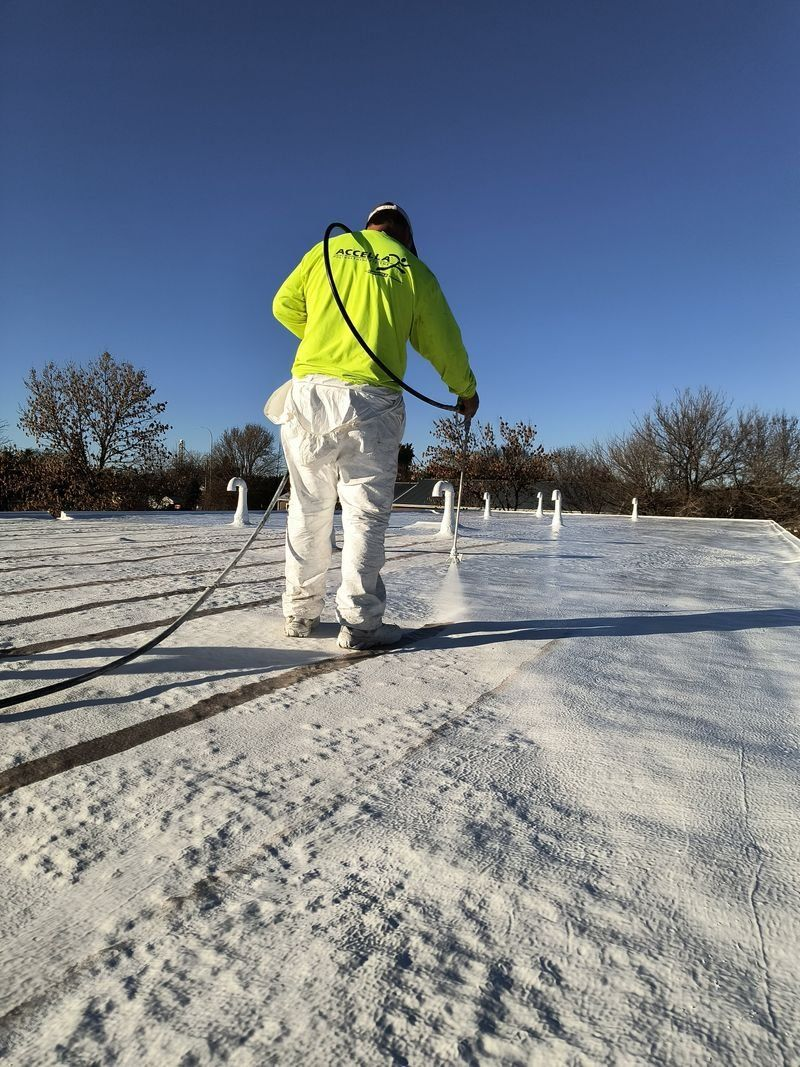
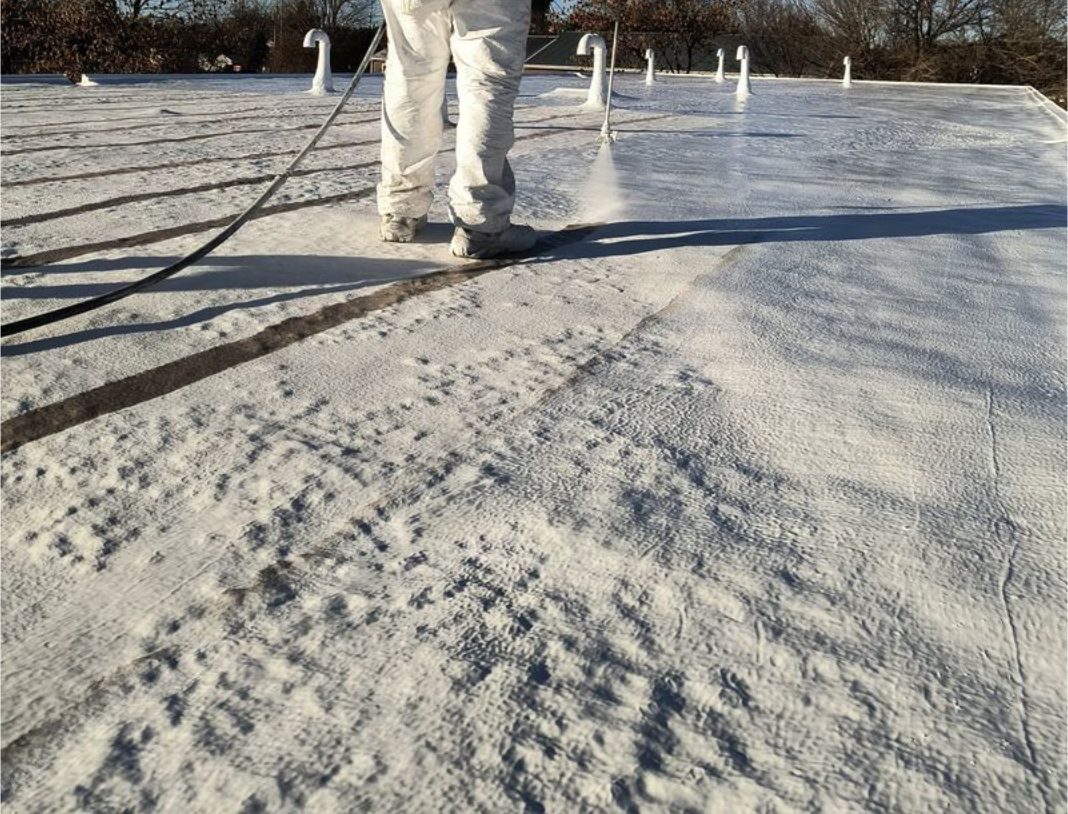
Surface prep is everything with spray foam. We clean and prime the substrate to manufacturer specifications before a single pass of foam goes down. Then we apply the polyurethane foam in controlled lifts to the designed thickness — building in tapers where needed to improve drainage and eliminate ponding areas.
Step 4
Protective Coating, Final Inspection & Warranty
Once the foam is cured we apply the Conklin elastomeric top coat to protect the foam from UV degradation and weather exposure. We walk the completed roof with you, document everything, and hand you your warranty paperwork the same day — clean and complete, ready for your insurance carrier or property records.
What Spray Foam Roofing Actually Does — And Why It Works So Well in This Climate
Spray polyurethane foam roofing is exactly what it sounds like. A two-component liquid system gets sprayed directly onto your existing roof surface where it expands, self-adheres, and cures into a rigid seamless insulation layer that covers every penetration, every drain, every parapet edge, and every HVAC curb with zero gaps and zero seams for water to find. Then a protective elastomeric top coat goes over the foam to protect it from UV exposure and weather — and that top coat is what carries the Conklin warranty. The result is the closest thing to a perfect flat roof system that exists for South Bend's climate. No seams to pull apart in freeze-thaw cycles. No gaps for lake-effect moisture to infiltrate. No thermal bridges bleeding heat out of your building all winter. Just a continuous airtight insulated waterproof surface from parapet to parapet. And because the foam can be tapered during application it can actually improve your roof's drainage slope — which means less ponding water after every spring snowmelt, which is one of the most common and destructive problems we see on South Bend flat roofs.
Questions South Bend Property Owners Ask About Spray Foam Roofing
Is spray foam roofing a good fit for South Bend's climate?
It's one of the best fits available. Spray polyurethane foam has a closed-cell structure that resists moisture infiltration at the cellular level — which is exactly what you need in a climate with 85% average winter humidity and hundreds of freeze-thaw cycles per year. The seamless application eliminates the seam fatigue that destroys conventional flat roof systems in this market over time.
How much insulation value does spray foam roofing add?
Closed-cell spray polyurethane foam has an R-value of approximately R-6 to R-7 per inch — significantly higher than most conventional flat roof insulation boards. On an older South Bend commercial building with deteriorated or undersized insulation, adding two to three inches of foam can dramatically reduce heating and cooling loads and produce noticeable reductions in energy costs within the first full year.
Can spray foam roofing fix my ponding water problem?
In most cases yes. One of the biggest advantages of spray foam over other flat roof systems is the ability to taper the foam during application — building in positive slope toward drains even on a roof that was originally installed completely flat. If ponding water after snowmelt is a recurring problem on your South Bend flat roof, tapered foam is one of the most effective permanent solutions available.
How long does a spray foam roof last?
The foam itself is extremely durable and can last the life of the building if properly maintained. The protective top coat is what requires periodic attention — typically a recoat every 10 to 15 years to maintain the Conklin warranty and keep the UV protection layer performing. That recoat is a fraction of any other roofing cost you'll ever face on that building.
Can spray foam be applied over my existing roof without tear-off?
In most cases yes. As long as the existing substrate is structurally sound and not heavily saturated with moisture, spray foam can be applied directly over EPDM, TPO, modified bitumen, metal, and built-up roofing systems — eliminating tear-off costs, landfill fees, and the production disruption that comes with a full replacement project.
How does spray foam roofing affect my energy costs in summer?
The Conklin elastomeric top coat applied over the foam reflects up to 85% of solar heat — which means your building runs significantly cooler in summer without working your HVAC system as hard. Combined with the dramatically improved insulation value of the foam layer itself, many South Bend commercial building owners see meaningful reductions in their NIPSCO cooling bills within the first full summer after installation.
What if my roof is actively leaking right now?
Call us at (574) 406-2281. We respond 24/7 for commercial roof emergencies across South Bend, Mishawaka, Granger, and all of St. Joseph County. No trip charge, no voicemail, no waiting until Monday morning while water damages your equipment or inventory.
Stop Heating the Sky Above Your Building.
Call us at (574) 406-2281 and we'll have someone out to assess your roof and insulation within 24 hours — completely free. No trip charge, no obligation, no runaround. Family owned, locally operated, Conklin Certified, and serving South Bend and Michiana commercial properties since 2004. One seamless system. Zero seams. Twenty years of protection.